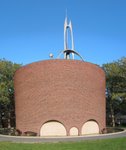
Tuesdays in the Chapel
Tuesday September 27 | 8:30am | MIT Chapel
Speaker: Brian Aull, Bahá'í Chaplain, MIT
Readings:
O CHILDREN OF MEN! Know ye not why We created you all from the same dust? That no one should exalt himself over the other. Ponder at all times in your hearts how ye were created. Since We have created you all from one same substance it is incumbent on you to be even as one soul, to walk with the same feet, eat with the same mouth and dwell in the same land, that from your inmost being, by your deeds and actions, the signs of oneness and the essence of detachment may be made manifest. Such is My counsel to you, O concourse of light! Heed ye this counsel that ye may obtain the fruit of holiness from the tree of wondrous glory.
-Bahá’u’lláh
Do we not all have one father? Has not one God created us? Why do we deal treacherously each against his brother so as to profane the covenant of our fathers?
Malachi 2:10
"O Mankind, We created you from a single (pair) of a male and a female and made you into nations and tribes, that you may know each other. Verily the most honored of you in the sight of God is he who is the most righteous of you." (Quran 49:13)
Radiate boundless love towards the entire world, above, below, and across, unhindered, without ill will, without enmity. –The Buddha
And when he sees Me in all and sees all in Me, then I never leave him and he never leaves Me, and he who in this oneness of Love, Loves Me in whatever he sees, wherever this man may live, in truth he lives in Me. –Bhagavad Gita
Talk (listen here):
Saint Andrew the Apostle Catholic Church stands on the corner of 38th Street and Forest Manor Drive on the northeast side of Indianapolis. Attached to the church is the elementary school that I attended in the 1960s. From my home on Devon Lake, it was just shy of a 1-mile walk or bike ride to get to school or to Sunday Mass. At the time, the neighborhoods traversed in that journey were overwhelmingly white and upper middle class. If you drove south from the church a few blocks, the character of the neighborhood changed suddenly when you crossed a certain street. You were now in a predominately black neighborhood. As a white person, even in the safety of a passing car, I found the transition was accompanied by a sense of unease.
At one point, a plan was announced for the building of a Baptist church on the corner opposite Saint Andrew, a predominately black congregation. Someone circulated a petition seeking to stop this, claiming that the new church would create parking and traffic problems. My Uncle Francis, who lived just down the street, said that he “smelled a rat.” My elders all recognized the racial motivation behind the petition, and condemned it.
On the other hand, there were no black people in my family’s social circle. I lived in a sort of bubble. Thinking about the segregated neighborhoods we lived in recalls to mind Martin Luther King’s statement: "Men often hate each other because they fear each other; they fear each other because they don't know each other; they don't know each other because they cannot communicate; they cannot communicate because they are separated."
As the years went by, the demarcation line moved steadily northward, and there was “white flight” to suburbs farther north. There were economic motives, of course, but also it’s human nature to flee the unfamiliar, to fear what we don’t understand.
When I grew up, I had opportunities to escape the bubble. Going to school in Cambridge, Massachusetts, I met students and scholars from all over the world. Then I met my wife, who is the daughter of a marriage between an African American man and a white woman. Now I had black people who were part of my extended family. My own son and daughter are descendants of African slaves. In recent years, I became involved in reaching out to families, mostly Haitian immigrants, who live in low-income housing projects in Cambridge. I’ve conducted classes on virtues and spirituality for their children. Now I comfortably visit the parents or attend a child’s birthday party. Growing up in Indianapolis, it would have been inconceivable to go down to 23rd street and visit a black family.
From inside the bubble, it felt like a warm and protective shelter. From outside the bubble, I recognize it as a prison. Many of the fears I had were based on superstition. Being human, I still have many kinds of prejudice and bias; there’s always more progress to make, larger bubbles to escape.
In 2014, I returned to Indianapolis for a weekend to attend the first ever reunion of my grade school class. A number of the classmates attended Sunday Mass. The neighborhood population is now nearly 90% black, so I went there expecting to see an overwhelmingly black congregation. Instead, I saw a diverse one, blacks and whites celebrating the Mass together and working together on outreach service projects in the neighborhood. There were some whites that had refused the path of “white flight” and others who continued to attend the church after moving out of the parish. In a society where churches have been among the most segregated institutions, this is a worthy accomplishment and shows that racial alienation is not destiny. How we deal with diversity and difference is, in the final analysis, a choice.
Tuesday, September 27, 2016
Tuesday, September 13, 2016
Tuesdays in the Chapel - September 13, 2016
John Wuestneck, Interim Chaplain to the Institute
2 Stories and a poem:
I believe, (you can disagree with me) we don’t get to choose our experiences with difference or diversity, they just present themselves.
I grew up in Minneapolis, MN. We lived in a working class neighborhood that was populated by lots of Swedish folks and Norwegians. I didn’t know that when I was a kid, most all of us had blue eyes and fair skin. But I was a minority, even though I didn’t really get that until high school. Names like Nelson and Olsen were spelled many different ways (Olsen, Olson, Ohlson, Ohlsson), but there was only one Wuestneck. And I was on the swimming team in high school.
We practiced at the university of Minnesota pool and since we had drivers licenses we drove to practice. We could drive at 15, which is a mistake, but that’s a whole story by itself. One evening before practice my mom was making spaghetti for dinner and since I had to leave for practice I would have to eat early. There were no pizza places anywhere near. Mom’s spaghetti was a casserole, pasta, sauce and whatever in a dish, baked for hours, but what did I know. I think the recipe is the one printed from the red and white cookbook that I found in her belongings, “The Better Homes and Garden New Cookbook”. She must have used that recipe and added the baking part to be creative because she was an artist, not a good cook. My sisters and I remember her now as the casserole queen. We used to like the hard noodles baked to the side of the dish – who knows why I even remember that. Well on the early dinner day for me I asked her or she offered me some of the unbaked spaghetti because I couldn’t wait before I had to leave for practice. I had some and I really liked it. No Italians around to introduce me to real spaghetti and gravy. So much for experience of difference. My respect for those yet to be known Italians in my life was lifted to new levels that day, and I never liked the baked variety again.
Early in my teen years I had a paper route, and I got a second job in a little corner grocery store. Morris Korsh was the owner. He was Jewish and only the second Jew I had met. There was a woman down the block from us who was Jewish and I shoveled her snow, but I never really got to know her. She seemed to always be in a bad mood, but I think that the cold and snow was the cause. Morry was different. He came from Germany before the Second World War with his family. As a boss he was simply wonderful. There were five or six of us who worked for him, stocking shelves, bagging groceries, keeping the walk in coolers filled, cleaning, getting held up at gun point, things like that. Only one gun point robbery. All of us were Christians and I knew nothing about Jews or their ways, except that somewhere we learned to cross the street and not walk on the side of the street with the synagogue. Ah, the roots of bigotry and prejudice.
Morry let us borrow his car to go on dates, drive to the beach or just drive around, he took us on fishing trips and hunting trips. He paid us well on the honor system, treated us with respect and was like another father to us. I worked for him for five years. He was a good boss and expected us to work hard and helped us play hard and was flexible and understanding about our needs and schedules.
I never knew about his Temple or synagogue. I knew his wife because she was the bookkeeper. I knew him as Morry and loved him a lot. He offered to pay our way through college and one of us took him up on that. It was much later in life that I learned why he had left in Germany and how hard his life had been. That experience with Morry gave me a great understanding of diversity even though there was no popular word like that then. His life of generosity and kindness and openness to my teen age foolishness made a big impact on me. Some of it rubbed off I’m sure. I didn’t choose these experiences, they just happened with me.
Last reading is a poem by a friend of mine. In introduction Harry writes: My Grandfather was 85 when he died nearly thirty six years ago. I finally put him to rest on Tuesday morning, April 7, 192 at 5:49 a.m. when I write this poem. He was a deacon in the Baptist Church, a founder of the local NAACP, president of the Community Center. When he was 75 he participated with the young people in the civil rights demonstrations of the 1960s. He was predictably proud when the governor of Missouri declared a day in his honor. But this poem is not about that kind of thing, because, when all is said and done, that is not the stuff of which grandfathers are made.
I often get tears in my eyes when I read this poem, it has deep meaning for me.
My Grandfather by Harry Johnson
My grandfather could shoot a hole through a half-dollar
at a hundred paces.
He could shoot a marble so hard it broke the marble it hit -
and it always hit the other marble.
He could throw a ball so hard
nobody was willing to catch it.
Hell, he once pitched a perfect game: twenty-seven up,
twenty-seven down - nobody reached first base.
But he couldn't buy a Coke at the five-and-dime.
My grandfather could put out a street light with a slingshot
made from a clothespin and a couple of rubber bands.
He could walk on stilts and walk on his hands
when he was sixty years old.
He could make a quarter disappear and
find a nickle in your ear.
He could win a prize at every concession on the midway
at the Missouri State Fair.
But he couldn't buy a Coke at the five-and-dime .
My grandfather could hit a rabbit on the run
with a single shot from a 22-long.
He could pitch horseshoes so well nobody would play
against him -got a ringer nearly every time.
He could sing bass in the Baptist Church choir all by himself,
and when he prayed there was a tear in every eye
and a lump in every throat.
He could eat six ears of corn and a dozen biscuits covered with
Grannie's orange/peach marmalade - and ask for more.
But he couldn't buy a Coke at the five-and-dime.
2 Stories and a poem:
I believe, (you can disagree with me) we don’t get to choose our experiences with difference or diversity, they just present themselves.
I grew up in Minneapolis, MN. We lived in a working class neighborhood that was populated by lots of Swedish folks and Norwegians. I didn’t know that when I was a kid, most all of us had blue eyes and fair skin. But I was a minority, even though I didn’t really get that until high school. Names like Nelson and Olsen were spelled many different ways (Olsen, Olson, Ohlson, Ohlsson), but there was only one Wuestneck. And I was on the swimming team in high school.
We practiced at the university of Minnesota pool and since we had drivers licenses we drove to practice. We could drive at 15, which is a mistake, but that’s a whole story by itself. One evening before practice my mom was making spaghetti for dinner and since I had to leave for practice I would have to eat early. There were no pizza places anywhere near. Mom’s spaghetti was a casserole, pasta, sauce and whatever in a dish, baked for hours, but what did I know. I think the recipe is the one printed from the red and white cookbook that I found in her belongings, “The Better Homes and Garden New Cookbook”. She must have used that recipe and added the baking part to be creative because she was an artist, not a good cook. My sisters and I remember her now as the casserole queen. We used to like the hard noodles baked to the side of the dish – who knows why I even remember that. Well on the early dinner day for me I asked her or she offered me some of the unbaked spaghetti because I couldn’t wait before I had to leave for practice. I had some and I really liked it. No Italians around to introduce me to real spaghetti and gravy. So much for experience of difference. My respect for those yet to be known Italians in my life was lifted to new levels that day, and I never liked the baked variety again.
Early in my teen years I had a paper route, and I got a second job in a little corner grocery store. Morris Korsh was the owner. He was Jewish and only the second Jew I had met. There was a woman down the block from us who was Jewish and I shoveled her snow, but I never really got to know her. She seemed to always be in a bad mood, but I think that the cold and snow was the cause. Morry was different. He came from Germany before the Second World War with his family. As a boss he was simply wonderful. There were five or six of us who worked for him, stocking shelves, bagging groceries, keeping the walk in coolers filled, cleaning, getting held up at gun point, things like that. Only one gun point robbery. All of us were Christians and I knew nothing about Jews or their ways, except that somewhere we learned to cross the street and not walk on the side of the street with the synagogue. Ah, the roots of bigotry and prejudice.
Morry let us borrow his car to go on dates, drive to the beach or just drive around, he took us on fishing trips and hunting trips. He paid us well on the honor system, treated us with respect and was like another father to us. I worked for him for five years. He was a good boss and expected us to work hard and helped us play hard and was flexible and understanding about our needs and schedules.
I never knew about his Temple or synagogue. I knew his wife because she was the bookkeeper. I knew him as Morry and loved him a lot. He offered to pay our way through college and one of us took him up on that. It was much later in life that I learned why he had left in Germany and how hard his life had been. That experience with Morry gave me a great understanding of diversity even though there was no popular word like that then. His life of generosity and kindness and openness to my teen age foolishness made a big impact on me. Some of it rubbed off I’m sure. I didn’t choose these experiences, they just happened with me.
Last reading is a poem by a friend of mine. In introduction Harry writes: My Grandfather was 85 when he died nearly thirty six years ago. I finally put him to rest on Tuesday morning, April 7, 192 at 5:49 a.m. when I write this poem. He was a deacon in the Baptist Church, a founder of the local NAACP, president of the Community Center. When he was 75 he participated with the young people in the civil rights demonstrations of the 1960s. He was predictably proud when the governor of Missouri declared a day in his honor. But this poem is not about that kind of thing, because, when all is said and done, that is not the stuff of which grandfathers are made.
I often get tears in my eyes when I read this poem, it has deep meaning for me.
My Grandfather by Harry Johnson
My grandfather could shoot a hole through a half-dollar
at a hundred paces.
He could shoot a marble so hard it broke the marble it hit -
and it always hit the other marble.
He could throw a ball so hard
nobody was willing to catch it.
Hell, he once pitched a perfect game: twenty-seven up,
twenty-seven down - nobody reached first base.
But he couldn't buy a Coke at the five-and-dime.
My grandfather could put out a street light with a slingshot
made from a clothespin and a couple of rubber bands.
He could walk on stilts and walk on his hands
when he was sixty years old.
He could make a quarter disappear and
find a nickle in your ear.
He could win a prize at every concession on the midway
at the Missouri State Fair.
But he couldn't buy a Coke at the five-and-dime .
My grandfather could hit a rabbit on the run
with a single shot from a 22-long.
He could pitch horseshoes so well nobody would play
against him -got a ringer nearly every time.
He could sing bass in the Baptist Church choir all by himself,
and when he prayed there was a tear in every eye
and a lump in every throat.
He could eat six ears of corn and a dozen biscuits covered with
Grannie's orange/peach marmalade - and ask for more.
But he couldn't buy a Coke at the five-and-dime.


Thursday, September 1, 2016
Parting words from Robert M. Randolph
Friends, on August 30th my time as Chaplain to the Institute ended.
John Wuestneck will serve an interim role while a search for a permanent chaplain gets underway.
I have been honored these last nine years to serve as the first Chaplain to the Institute. MIT is home to a diverse and vibrant community of believers and seekers in the varied realms of spiritual endeavor. From the grand traditions of faith to the small communities of what is happening now, MIT does what it always does. It creates vibrant centers of those who seek to understand the varied spiritual traditions and their search for meaning.
As it always has, MIT hears many voices and tries to muffle none. Sometimes this leads to cacophony; on other occasions the symphony comes into tune. Billy Graham gave us that image drawing on the Christian tradition from the podium in Kresge. I find it an equally valid descriptor for the multifaceted community that is MIT. We listen and learn from each other.
That has been the joy of this last near decade. The Chaplains have learned to work together holding close their unique views and hearing from others the values they hold in greatest esteem. They represent a true learning community: respecting difference and holding dear the values they share. Students learn from them and in a variety of ways replicate what they have seen and learned.
Now is the appropriate time for the next chapter to begin. I look forward to watching it unfold.
Robert M. Randolph
Thursday, June 16, 2016
Last Words
Tuesdays in the Chapel
May 10, 2016
From What We Forgot to Tell
You
By Peter Gomes
“The first thing you should
know is that you will make mistakes , and coming (to MIT) might be one of your biggest.
Neither education nor religion will make you immune to errors and mistakes, and
if you think about it, both education and religion exist on the presupposition
of the inevitability of mistakes. Education is instruction in the art of
distinguishing between truth and falsehood, right and wrong, and we need error
in education in order to discern truth. Religion is not simply the way in which
we should go, but what we should do when inevitably we don’t go that way. That
is what religion is all about; it is not a formula for the perfect but for the
imperfect.
Finally, …I would ask you to
remember because we didn’t think to tell you much about it, is that the ultimate goal of life ought not to be
victory, nor power, nor riches, nor fame,
although Harvard students get these in abundance. When you read the
Fifth Reunion report, … they all have accounts of these things heaped up in
abundance, buy the older the report and the shorter the account, the more the
emphasis is placed on things like contentment, serenity, inner peace, and
satisfaction. (p. 286-287)
Our time
together these past weeks has been focused on what we would like to see the
future look like. It has been a smorgasbord of insights and viewpoints. We have
been reminded about the denial of death and the challenge of autism; emotions
have been often raw and we have been reminded that we do not talk often
together about the challenges of our work and lives. We are after all occasional friends coming
together at random enjoying communion over coffee and donut holes.
Today we are
here to hear last words. This is the last week of classes and we meet only when
class is in session a concession to the hope that students would join us, but
that has not happened. And it is probably for the better, as these moments have
become important times for those who can make their schedules work. Whether we gather in the fall will not be my
call.
I turned to
my late friend Peter Gomes for our reading.
He reminds us of things we do not talked about. The search for meaning
is one side of a coin on which the other is the search for truth. Both embrace
the notion that we will often make mistakes. The ongoing conversation about the
Green Line extension is an unusual public discussion of mistakes made and the
effort to not let those failures stop an otherwise needed project. We have engaged in some similar conversations
these last days about our own failures in building housing for our students. But
we will still need dormitories and those willing to make commitments to the
education that occur in residence. We learn from our mistakes
As case in
point is the installation on the grounds formally occupied by Bexley Hall.
Sunday afternoon the elaborate and interesting piece blew down and I learned
from talking with those who were given the task of figuring out what happened
that they would learn far more the failure than they would have learned had all
gone well. Architects regard the learning process as shaped by learning from
miscalculations. So should we all.
And we are
most human when we let the barriers down and talk together about what we have
learned in reflection over coffee; I hope those moments continue. We need them.
Peter Gomes offers wise counsel when he talks about religious sentiment.
But the key
remains our ability to create communities of conversation where we can grow
together. It is a simple notion but of profound importance in a place where
standards are high, our efforts are flawed and we are tasked with showing the
way for the next generation.
And finally,
what is it all about? Some of us will settle for the exercise of power. We see
that in the political conversation that occupies such a public place in our
lives today. Dissatisfaction with our inability to solve problems that have
dogged human kind since our origins has boiled over into rhetoric that vents
but does not heal.
And all the
while we each go about dealing with the daily tasks of caring for the children
we bring into this world; drop Stephanie Kloos Smith a note if you have a
moment congratulating her on her first Mother’s Day. Or the children we have inherited as part of
our work together. Or the relationships we nourish in our lives beyond MIT.
You think
about those things as the clock ticks as careers wind down and you try to
measure what you have done in your work. That has been on my mind of late as I
move toward retiring. There are so many things I would have done differently so
there is comfort in talking about mistakes and reflecting on those things that
are most important.
And the satisfaction comes with knowing we
have done the best we could and that is good enough.
I am grateful
to those who have spent Tuesday mornings here. Now let’s talk over coffee!
Robert M Randolph
Chaplain to the Institute
Saturday, June 4, 2016
Graduation Invocation MIT 2016
Invocation
June 3, 2016
We are of diverse origin.
We have come here from many
countries;
We speak many languages and
honor diverse communities.
We draw strength from
religious traditions as different as
they are influential.
We draw strength from cultures
that honor no higher power,
but who aspire to greater
good.
Today we invoke the presence
of the Gods we know.
And we reach beyond what we
know and give thanks for
the beauty of our world and
the joy we share as we celebrate
this day of accomplishment.
We give thanks for the bricks
of Bexley Hall reminding us of what we do not know.
We give thanks that the
universe challenges our sense of wonder and points beyond itself to greater
discoveries.
We give thanks for those of
our guild who exhibited courage of purpose despite skeptics and nay-sayers
And who heard the still small
voice of the cosmos.
May we remember and emulate
their courage and patience as we seek to build a better world.
We are grateful for those who
have given us strength and encouragement:
our families who told us we could do it and
held up our hands
our teachers who shared their wisdom and opened our minds
our mentors who cried tears
and gave us hearts for service.
We understand that our
challenge is to not only give back to those who have given to us but to call
into being by our work a world that is whole!
May it be so!
Amen
Robert M Randolph
Chaplain to the Institute
Tuesday, May 10, 2016
A vocabulary of hope
Prelude: Herzlich tut mich verlangen ~ F. W. Zachau ~ Bart Dahlstrom, organ
Readings:
Bahá'ì Blessed is he who preferreth his brother before himself.
Christianity All things whatsoever ye would that men should do to you, so ye do to
them, for this is the law and the prophets. - Matthew 7:1
Confusianism Do
not do to others what you would not like yourself. Then there will be no
resentment against you, either in the family or in the state. - Analects 12:2
Buddhism Hurt no other in ways that you yourself would find hurtful. -
Udana-Varga 5,1
Hinduism This is the sum of duty; do naught unto others what you would not
have them do unto you. - Mahabharata 5,1517
Islam No one of you is a believer until he desires for his brother that
which he desires for himself. - Sunnah
Judaism What is hateful to you, do not do to your fellow man. This is the
entire Law; all the rest is commentary. - Talmud, Shabat 3id
Taoism Regard your neighbor's gain as your gain, and your neighbor's loss as
your own loss. - Tai Shang Kan Yin P'ien
Zoroastrianism That
nature alone is good which refrains from doing another whatsoever is not good
for itself. - Dadisten-I-dinik, 94,5
Postlude: O Lamm Gotts, unschuldig - BWV 656 ~ J. S. Bach ~ Bart
Dahlstrom, organ
This semester we’ve been asked to share our hopes for the
coming term. Thinking about this, I
started reflecting on the word “hope.”
In troubled times, that seems like a scarce commodity. Martin Luther King said that “a riot is the language of the unheard.” Perhaps we can also say that it’s the
language of the hopeless. So one hope I
have for the coming term is to be able to offer a vocabulary of hope. Hope can be used with many shades of
meaning. But I mean not a naïve expectation
that everything will turn out OK, but rather a sense of agency. It’s a belief in our capacity to act and make
a difference.
To believe this is
not to ignore history, but to understand it.
The 20th century, for example, saw the retreat of antiquated world views
such as male superiority and white supremacy. At the beginning of the century in the US,
women could not vote, were excluded from many professions, and regarded as an
inferior breed – barriers that fell during the course of the century. In 1900, reconstruction had ended in the
South and the nation was headed into a period that marked the low point in the
history of race relations. 2008 marked
the election of the first black president.
In the wake of two ruinous world wars, the world took its first clumsy
steps toward international governance.
Nations voluntarily started creating instruments of governance on an
international level that mediate disputes, set standards of international law and
human rights, and undertake humanitarian work in the fields of health,
education, and economic development. These instruments are clearly flawed, but
their historical significance should not be underestimated.
Yes, there’s still
racism, sexism, and violent conflict. But
we’ve crossed a threshold of beginning to recognize the oneness of the human
family and beginning to implement this principle in our institutions. Despite temporary setbacks, there’s no going
back.
The 20th
century also saw the rise of an interfaith movement, in which followers of
historically antagonistic religions were drawn together; by the end of the
century interfaith gatherings and services were common, something unthinkable a
few decades earlier. But is there a
danger that these efforts become a feel-good exercise that lacks a coherent
purpose and spiritual commitment? Can
religion catalyze the kinds of progress I’ve described? Or will it still be captive to narrow
sectarian dogmas that divide and balkanize humanity, suppress the life of the
mind, and sow the seeds of hatred and fanaticism? The goal of interfaith work, as I see it, is
to enable the world’s religious communities rise to the challenge of promoting
the high aims of ennobling human character, encouraging the investigation of
reality, creating authentic relationships, and building a just and progressive
civilization.
Last fall, in The
Tech, I spoke out in defense of the Muslims on campus, while at the same time calling
on the world’s Muslim religious leaders to allow for greater critical inquiry and
efforts for reformation. I also
stressed the importance of interfaith work.
I’m happy to report that a group of students have responded to this
call, and have begun to conduct a series of dinner gatherings that draw
together participants from diverse religions.
My hope is that we can create close friendships, have probing discourse,
and do collaborative work on the task of building the world for which we hope.
Speaker: Brian Aull, Bahá'í Chaplain, MIT
Subscribe to:
Posts (Atom)