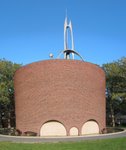
MIT
Almighty God, known by many names, called by many voices,
we invoke your presence with us on this day of celebration.
We celebrate the accomplishments of students who have learned and grown as they have longed for this moment.
We celebrate the accomplishments of families who have supported their sons and daughters in ways that transcend the checks to the bursar.
We celebrate the accomplishments that are the result of teachers who went beyond expectations of peers and demanded the best of the students in their care who did not know how good they could be.
We celebrate the accomplishments made possible by mentors who led by example; of spouses who held up tired arms and encouraged flagging spirits, of children who waited.
In these hard days when we are reminded often of what we cannot do, help us to remember what we have done. Let angry words not be our mantra, but rather words of celebration, words of joy and words of hope. Tomorrow will be better because of what we celebrate today!
This is our prayer,
Amen
Saturday, June 5, 2010
Wednesday, May 26, 2010
thoughts from the Koran
Assalamu alaykum=peace be with you, an Islamic greeting in Arabic.
I am truly delighted to be among the believers of God. The Islamic scripture Qur’an says, “Do not despair of solace from God. No one despairs of solace from Allah except for people who do not believe. (Surah, ie. Chapter Yusuf, no. 87). In these stressful times, I find the particular passage from the Qur’an as a source of strength for us all. As we approach Mothers’ Day, I am thinking of a Hadith.
saying of the Prophet Muhammad. It says: “Paradise lies under the feet of mothers.” I am sure all believers will agree that mothers deserve our love, respect, and admiration.
Omar Khalidi
I am truly delighted to be among the believers of God. The Islamic scripture Qur’an says, “Do not despair of solace from God. No one despairs of solace from Allah except for people who do not believe. (Surah, ie. Chapter Yusuf, no. 87). In these stressful times, I find the particular passage from the Qur’an as a source of strength for us all. As we approach Mothers’ Day, I am thinking of a Hadith.
saying of the Prophet Muhammad. It says: “Paradise lies under the feet of mothers.” I am sure all believers will agree that mothers deserve our love, respect, and admiration.
Omar Khalidi


Thursday, May 13, 2010
Are We Listening?
First Reading:
Together, one with one, we can build the new Earth, a place of wholeness in diversity. We can transform our organizations into communities, places of compassion and care.
Our leaders will focus on affirming and renewing values, building community, and releasing human possibilities. Connection, not acquisition, will be seen as the primary human motivator. The core question will be, How can I help?
Together, we will build spaces of renewal, creating safe places in dysfunctional organizations, seedbeds for a new world. We will advocate a new leadership based on service above self. We will replace the leader on top of our pyramid with a leadership circle, moving beyond the rhetoric of participation to shared governance in fact.
In calling forth this new day, let us be guided by our hearts to be the vessels for the light that powers the Universe, to be a chord in the one song of our healed and holy Home
- John Jacob Gardiner, Professor of Leadership, Seattle University, Washington
Good morning. My name is Abigail Francis, and I am the Director of Lesbian, Bisexual, Gay, and Transgender Services at MIT.
Sometimes I think I may have been called to this position. Have you ever had that feeling…like you were somehow in just the right place at just the right time with just enough experience, skills, and knowledge for the situation? Was it luck…effort…planning…fate…God…that helped you get there - maybe some combination of these things?
I like the idea of a calling because it implies that I have the awareness and the ability to listen. Listening is a skill that I think could use some sharpening at MIT. We have no problem sharing our ideas, our innovations, our solutions. But sometimes I think the real answers lie in our ability to just be…still…quiet…patient…and to hear from those whose voice has been left out. In essence, this is the true nature of my work, and I argue that it is in fact, all of our work.
As a community we share a collective responsibility to create an environment where everyone is valued, where all good ideas matter, and where all are invited to be their very best. Unfortunately, that is not always the case.
Sometimes it takes some digging for me to see the good in people who actively hate others or in a situation where a student faces a deep despair. Imagine that after saying just three little words - you loose all emotional, spiritual, and financial support from those who are supposed to love you the most. All your community, history, and sense of self-worth - gone - after saying “mom”, “dad”, “fraternity brother”, “sorority sister”, “athletics teammate”, “I am gay” or “I am transgender”. Or imagine living your life in hiding because coming out as LBGT in your home country or home state could have you arrested or even killed. Imagine having your spouse die in the hospital while you and your children aren’t permitted to see them because you are the same gender. Imagine being fired from your job simply because of your gender identity.
Every day I hear from those who are silenced, oppressed, discriminated against, assaulted, isolated, and neglected. Their stories are real, and their negative experiences are a constant. So I wonder, as a leading institution, how can we “build a new earth” as John Jacob Gardner describes? What would it take to reach a place of “wholeness in diversity”? And as an institution, do we all care to reach for that place? Is it worth the journey to a place or time where everyone feels included and valued as equals? Can we even imagine the possibilities if everyone at MIT were able to operate at their peak performance? What would happen if we could eliminate all forms of power, privilege, and oppression? Do you agree with Nelson Mandela that “the time for the healing of wounds has come”, that “the time to build is upon us”? And if so, then how might we get there?
I’m afraid that these questions are without a scientific formula. The problems of achieving equality for all people, of transforming an institution, are not a quick fix. Yet, progress is possible. It doesn’t have to be perfect. It may very well get messy. Mandela says, “there is no easy road to freedom”. But as with science, we can learn from our mistakes. We can think about our own forms of privilege, and we can improve on multiple forms of cultural competence.
The real challenge is that in order to succeed we must act together. We must ask about what we are called to do as a community, as a society, as a department, as a laboratory, as a board, and as an institute. If it does take a village to raise a young person, then what role will we play collectively, to help this generation of students grow and develop? And how can we ensure that they all have an equal chance at success?
I think we all have a calling to be part of the “birth of a new world”. The real question is: are we listening?
Second Reading:
The time for healing of the wounds has come.
The time to build is upon us...
We pledge ourselves to liberate all our people
from the continuing bondage of poverty, deprivation,
suffering, gender and other discrimination...
There is no easy road to freedom...
None of us acting alone can achieve success.
We must therefore act together as a united people,
for reconciliation, for nation building,
for the birth of a new world.
- Nelson Mandela
Together, one with one, we can build the new Earth, a place of wholeness in diversity. We can transform our organizations into communities, places of compassion and care.
Our leaders will focus on affirming and renewing values, building community, and releasing human possibilities. Connection, not acquisition, will be seen as the primary human motivator. The core question will be, How can I help?
Together, we will build spaces of renewal, creating safe places in dysfunctional organizations, seedbeds for a new world. We will advocate a new leadership based on service above self. We will replace the leader on top of our pyramid with a leadership circle, moving beyond the rhetoric of participation to shared governance in fact.
In calling forth this new day, let us be guided by our hearts to be the vessels for the light that powers the Universe, to be a chord in the one song of our healed and holy Home
- John Jacob Gardiner, Professor of Leadership, Seattle University, Washington
Good morning. My name is Abigail Francis, and I am the Director of Lesbian, Bisexual, Gay, and Transgender Services at MIT.
Sometimes I think I may have been called to this position. Have you ever had that feeling…like you were somehow in just the right place at just the right time with just enough experience, skills, and knowledge for the situation? Was it luck…effort…planning…fate…God…that helped you get there - maybe some combination of these things?
I like the idea of a calling because it implies that I have the awareness and the ability to listen. Listening is a skill that I think could use some sharpening at MIT. We have no problem sharing our ideas, our innovations, our solutions. But sometimes I think the real answers lie in our ability to just be…still…quiet…patient…and to hear from those whose voice has been left out. In essence, this is the true nature of my work, and I argue that it is in fact, all of our work.
As a community we share a collective responsibility to create an environment where everyone is valued, where all good ideas matter, and where all are invited to be their very best. Unfortunately, that is not always the case.
Sometimes it takes some digging for me to see the good in people who actively hate others or in a situation where a student faces a deep despair. Imagine that after saying just three little words - you loose all emotional, spiritual, and financial support from those who are supposed to love you the most. All your community, history, and sense of self-worth - gone - after saying “mom”, “dad”, “fraternity brother”, “sorority sister”, “athletics teammate”, “I am gay” or “I am transgender”. Or imagine living your life in hiding because coming out as LBGT in your home country or home state could have you arrested or even killed. Imagine having your spouse die in the hospital while you and your children aren’t permitted to see them because you are the same gender. Imagine being fired from your job simply because of your gender identity.
Every day I hear from those who are silenced, oppressed, discriminated against, assaulted, isolated, and neglected. Their stories are real, and their negative experiences are a constant. So I wonder, as a leading institution, how can we “build a new earth” as John Jacob Gardner describes? What would it take to reach a place of “wholeness in diversity”? And as an institution, do we all care to reach for that place? Is it worth the journey to a place or time where everyone feels included and valued as equals? Can we even imagine the possibilities if everyone at MIT were able to operate at their peak performance? What would happen if we could eliminate all forms of power, privilege, and oppression? Do you agree with Nelson Mandela that “the time for the healing of wounds has come”, that “the time to build is upon us”? And if so, then how might we get there?
I’m afraid that these questions are without a scientific formula. The problems of achieving equality for all people, of transforming an institution, are not a quick fix. Yet, progress is possible. It doesn’t have to be perfect. It may very well get messy. Mandela says, “there is no easy road to freedom”. But as with science, we can learn from our mistakes. We can think about our own forms of privilege, and we can improve on multiple forms of cultural competence.
The real challenge is that in order to succeed we must act together. We must ask about what we are called to do as a community, as a society, as a department, as a laboratory, as a board, and as an institute. If it does take a village to raise a young person, then what role will we play collectively, to help this generation of students grow and develop? And how can we ensure that they all have an equal chance at success?
I think we all have a calling to be part of the “birth of a new world”. The real question is: are we listening?
Second Reading:
The time for healing of the wounds has come.
The time to build is upon us...
We pledge ourselves to liberate all our people
from the continuing bondage of poverty, deprivation,
suffering, gender and other discrimination...
There is no easy road to freedom...
None of us acting alone can achieve success.
We must therefore act together as a united people,
for reconciliation, for nation building,
for the birth of a new world.
- Nelson Mandela
Thursday, May 6, 2010
On Prayer Dottie Mark
"Accept , O Lord, our thanks and praise for all that you have done for
us. We thank you for the splendor of the whole creation, for the beauty
of this world, for the wonder of life, and for the mystery of love.
We thank you for the blessing of family and friends, and for the loving
care which surrounds us on every side.
We thank you for setting us at tasks which demand our best efforts, and
for leading us to accomplishments which satisfy and delight us.
We thank you also for those disappointments and failures that lead us to
acknowledge our dependence on you alone.
Above all, we thank you for your Son Jesus Christ; for the truth of His
Word and the example of His life; for His steadfast obedience, by which
He overcame temptations; for His dying, through which He overcame death;
and for His rising to life again, in which we are raised to the life of
your kingdom.
Grant us the gift of your Spirit, that we may know Christ and make Him
known; and through Him, at all times and in all places, may give thanks
to you in all things. In Jesus name we pray, Amen"
When asked by Bob Randolph to give a short talk on my dreams for the future, I first wondered just what could I, the wife of an MIT professor, mother of 4 incredible young adult children and their spouses, Gram of 9 wonderful children, possibly have to say that could offer some words of hope. Here are my thoughts.
Roger and I live at Sidney-Pacific, a graduate residence for 700 students, half of whom are internationals. We have been involved in SPICE (Sidney-Pacific Inter Cultural Exchange) groups which meet over dinner to discuss such topics as their families’ origins, cultures, histories, religious beliefs and inter-cultural marriages to name a few. As I watch them talk and learn to listen to one another, I realize that my dreams and hopes for peace and justice, as well as overcoming poverty, illiteracy and racism, in this world can happen through these young people as they become leaders in their countries, in universities and large companies. How can this happen you might think? Well, my answer is through the mighty power of prayer.
So, why pray? Simple, Jesus prayed! Even as the Son of God, He prayed while He was on this earth. If the Son of God needed to pray, how much more do we stand in need of prayer?
Jesus began his ministry on earth with prayer. Before He chose His 12 disciples, He spent a whole night on a mountainside in prayer (Luke 6:10). Before raising Lazarus from the dead, He prayed (John 11:41-43). Jesus also gave thanks to God before blessing the five loaves and two fishes and feeding five thousand folks who had come to hear Him (Matthew 14:19).
We also have significant decisions to make in life, but do we pray about them? Having been a Christian since high school days, I remember praying about where to go to college, what to study, what job to take, whether to marry or not (and then I met Roger and knew the answer to that prayer!). When we had our children, I felt so strongly that we needed to pray about them from the moment of conception…and still we pray for them! In fact, prayer has been a vital part of my spiritual journey. I’m not sure how I could have raised our family, reached out to elderly parents and friends, without being under girded by the strength and wisdom one gets from prayer.
Stanley Hauerwas, professor at Duke Divinity School, opens all of his classes with prayer. In one he said, “Lord of all Wisdom, we thank you for your Word, Jesus Christ. Illumine our minds and bodies by that Word so that we might see every part of your creation as a reflection of your glory. In particular help us not to miss the small and contingent rocks, plants and animals in which children so delight. Make us like children so that we might enjoy the sheer giftedness of your creations. Amen.”
Where does one pray? One example that Jesus gave was to get alone to pray. It is in such undisturbed quietness that our souls will be ready to listen to God. Often He does not shout His messages to us but gently whispers them. Being alone and silent is often not enough .We need to spend time with God in talking to Him and reading His Word, the Bible.
Oswald Chambers, in his book, “My Utmost for His Highest,” says “If we think about prayer as the breath in our lungs and the blood from our hearts, we think rightly. The blood flows ceaselessly and our breathing continues ceaselessly, even if we’re not conscious of it, but it is always going on. We are not always conscious of Jesus keeping us in perfect union with God, but if we are obeying Him, He always is. Prayer is not an exercise, it is the life. Beware of anything that stops spontaneous prayer. ‘Pray without ceasing’ (I Thessalonians 5:17), keep the childlike habits of spontaneous prayer in your heart to God at all times.” In other words, you can pray to God where ever you are, even while driving your car, sitting on the T or walking across campus. We should also remember to give thanks for each day, for food, shelter, and good health…, but most importantly, we must remember that nothing pleases God more than to see us pray for His will to be done (Matt 6:10).
Our lives should be such that we glorify God. Our work and our deeds should be aimed to glorify God. Therefore, when we pray, we should pray for that answer to prayer which will bring glory to God. Jesus knew that when he prayed alone in the garden of Gethsemane, just before He was crucified. “My Father, if it is possible, let this cup pass from me; yet not as I will, but as Thou wilt” (Matthew 26:39). Oswald also said, “It is not so true that ‘prayer changes things’ as that prayer changes ME and I change things…prayer is not a question of altering things externally but of working wonders in a person’s disposition.”
Therefore, as I look to the future, at our MIT students and their potential for serving others and God, if they so choose, and at my family as they work to bring peace and justice to this troubled work, my prayer continues to be that their lives will bring glory to God in whatever they do and where ever they will be in this world.
Let us close by reading together the prayer of St. Francis of Assisi, “Lord make us instruments of your peace. Where there is hatred, let us show love; where there is injury, pardon; where there is doubt, faith; where there is despair, hope; where there is darkness, light; where there is sadness, joy.
O divine Master, grant that we may not so much seek to be consoled as to console; to be understood as to understand; to be loved as to love; For it is in giving that we receive; it is in pardoning that we are pardoned; and it is in dying that we are born to Eternal Life.” Amen
Dottie Mark
Housemaster
Sydney and Pacific
us. We thank you for the splendor of the whole creation, for the beauty
of this world, for the wonder of life, and for the mystery of love.
We thank you for the blessing of family and friends, and for the loving
care which surrounds us on every side.
We thank you for setting us at tasks which demand our best efforts, and
for leading us to accomplishments which satisfy and delight us.
We thank you also for those disappointments and failures that lead us to
acknowledge our dependence on you alone.
Above all, we thank you for your Son Jesus Christ; for the truth of His
Word and the example of His life; for His steadfast obedience, by which
He overcame temptations; for His dying, through which He overcame death;
and for His rising to life again, in which we are raised to the life of
your kingdom.
Grant us the gift of your Spirit, that we may know Christ and make Him
known; and through Him, at all times and in all places, may give thanks
to you in all things. In Jesus name we pray, Amen"
When asked by Bob Randolph to give a short talk on my dreams for the future, I first wondered just what could I, the wife of an MIT professor, mother of 4 incredible young adult children and their spouses, Gram of 9 wonderful children, possibly have to say that could offer some words of hope. Here are my thoughts.
Roger and I live at Sidney-Pacific, a graduate residence for 700 students, half of whom are internationals. We have been involved in SPICE (Sidney-Pacific Inter Cultural Exchange) groups which meet over dinner to discuss such topics as their families’ origins, cultures, histories, religious beliefs and inter-cultural marriages to name a few. As I watch them talk and learn to listen to one another, I realize that my dreams and hopes for peace and justice, as well as overcoming poverty, illiteracy and racism, in this world can happen through these young people as they become leaders in their countries, in universities and large companies. How can this happen you might think? Well, my answer is through the mighty power of prayer.
So, why pray? Simple, Jesus prayed! Even as the Son of God, He prayed while He was on this earth. If the Son of God needed to pray, how much more do we stand in need of prayer?
Jesus began his ministry on earth with prayer. Before He chose His 12 disciples, He spent a whole night on a mountainside in prayer (Luke 6:10). Before raising Lazarus from the dead, He prayed (John 11:41-43). Jesus also gave thanks to God before blessing the five loaves and two fishes and feeding five thousand folks who had come to hear Him (Matthew 14:19).
We also have significant decisions to make in life, but do we pray about them? Having been a Christian since high school days, I remember praying about where to go to college, what to study, what job to take, whether to marry or not (and then I met Roger and knew the answer to that prayer!). When we had our children, I felt so strongly that we needed to pray about them from the moment of conception…and still we pray for them! In fact, prayer has been a vital part of my spiritual journey. I’m not sure how I could have raised our family, reached out to elderly parents and friends, without being under girded by the strength and wisdom one gets from prayer.
Stanley Hauerwas, professor at Duke Divinity School, opens all of his classes with prayer. In one he said, “Lord of all Wisdom, we thank you for your Word, Jesus Christ. Illumine our minds and bodies by that Word so that we might see every part of your creation as a reflection of your glory. In particular help us not to miss the small and contingent rocks, plants and animals in which children so delight. Make us like children so that we might enjoy the sheer giftedness of your creations. Amen.”
Where does one pray? One example that Jesus gave was to get alone to pray. It is in such undisturbed quietness that our souls will be ready to listen to God. Often He does not shout His messages to us but gently whispers them. Being alone and silent is often not enough .We need to spend time with God in talking to Him and reading His Word, the Bible.
Oswald Chambers, in his book, “My Utmost for His Highest,” says “If we think about prayer as the breath in our lungs and the blood from our hearts, we think rightly. The blood flows ceaselessly and our breathing continues ceaselessly, even if we’re not conscious of it, but it is always going on. We are not always conscious of Jesus keeping us in perfect union with God, but if we are obeying Him, He always is. Prayer is not an exercise, it is the life. Beware of anything that stops spontaneous prayer. ‘Pray without ceasing’ (I Thessalonians 5:17), keep the childlike habits of spontaneous prayer in your heart to God at all times.” In other words, you can pray to God where ever you are, even while driving your car, sitting on the T or walking across campus. We should also remember to give thanks for each day, for food, shelter, and good health…, but most importantly, we must remember that nothing pleases God more than to see us pray for His will to be done (Matt 6:10).
Our lives should be such that we glorify God. Our work and our deeds should be aimed to glorify God. Therefore, when we pray, we should pray for that answer to prayer which will bring glory to God. Jesus knew that when he prayed alone in the garden of Gethsemane, just before He was crucified. “My Father, if it is possible, let this cup pass from me; yet not as I will, but as Thou wilt” (Matthew 26:39). Oswald also said, “It is not so true that ‘prayer changes things’ as that prayer changes ME and I change things…prayer is not a question of altering things externally but of working wonders in a person’s disposition.”
Therefore, as I look to the future, at our MIT students and their potential for serving others and God, if they so choose, and at my family as they work to bring peace and justice to this troubled work, my prayer continues to be that their lives will bring glory to God in whatever they do and where ever they will be in this world.
Let us close by reading together the prayer of St. Francis of Assisi, “Lord make us instruments of your peace. Where there is hatred, let us show love; where there is injury, pardon; where there is doubt, faith; where there is despair, hope; where there is darkness, light; where there is sadness, joy.
O divine Master, grant that we may not so much seek to be consoled as to console; to be understood as to understand; to be loved as to love; For it is in giving that we receive; it is in pardoning that we are pardoned; and it is in dying that we are born to Eternal Life.” Amen
Dottie Mark
Housemaster
Sydney and Pacific
Tuesday, May 4, 2010
For Mother's Day
The Lanyard
Billy Collins
The other day I was ricocheting slowly
off the blue walls of this room,
moving as if underwater from typewriter to piano,
from bookshelf to an envelope lying on the floor,
when I found myself in the L section of the dictionary
where my eyes fell upon the word lanyard.
No cookie nibbled by a French novelist
could send one into the past more suddenly—
a past where I sat at a workbench at a camp
by a deep Adirondack lake
learning how to braid long thin plastic strips
into a lanyard, a gift for my mother.
I had never seen anyone use a lanyard
or wear one, if that’s what you did with them,
but that did not keep me from crossing
strand over strand again and again
until I had made a boxy
red and white lanyard for my mother.
She gave me life and milk from her breasts,
and I gave her a lanyard.
She nursed me in many a sick room,
lifted spoons of medicine to my lips,
laid cold face-cloths on my forehead,
and then led me out into the airy light
and taught me to walk and swim,
and I, in turn, presented her with a lanyard.
Here are thousands of meals, she said,
and here is clothing and a good education.
And here is your lanyard, I replied,
which I made with a little help from a counselor.
Here is a breathing body and a beating heart,
strong legs, bones and teeth,
and two clear eyes to read the world, she whispered,
and here, I said, is the lanyard I made at camp.
And here, I wish to say to her now,
is a smaller gift—not the worn truth
that you can never repay your mother,
but the rueful admission that when she took
the two-tone lanyard from my hand,
I was as sure as a boy could be
that this useless, worthless thing I wove
out of boredom would be enough to make us even.
Billy Collins
The other day I was ricocheting slowly
off the blue walls of this room,
moving as if underwater from typewriter to piano,
from bookshelf to an envelope lying on the floor,
when I found myself in the L section of the dictionary
where my eyes fell upon the word lanyard.
No cookie nibbled by a French novelist
could send one into the past more suddenly—
a past where I sat at a workbench at a camp
by a deep Adirondack lake
learning how to braid long thin plastic strips
into a lanyard, a gift for my mother.
I had never seen anyone use a lanyard
or wear one, if that’s what you did with them,
but that did not keep me from crossing
strand over strand again and again
until I had made a boxy
red and white lanyard for my mother.
She gave me life and milk from her breasts,
and I gave her a lanyard.
She nursed me in many a sick room,
lifted spoons of medicine to my lips,
laid cold face-cloths on my forehead,
and then led me out into the airy light
and taught me to walk and swim,
and I, in turn, presented her with a lanyard.
Here are thousands of meals, she said,
and here is clothing and a good education.
And here is your lanyard, I replied,
which I made with a little help from a counselor.
Here is a breathing body and a beating heart,
strong legs, bones and teeth,
and two clear eyes to read the world, she whispered,
and here, I said, is the lanyard I made at camp.
And here, I wish to say to her now,
is a smaller gift—not the worn truth
that you can never repay your mother,
but the rueful admission that when she took
the two-tone lanyard from my hand,
I was as sure as a boy could be
that this useless, worthless thing I wove
out of boredom would be enough to make us even.
Tuesday, April 13, 2010
The Blind Side
Tuesday’s in the Chapel
April 6, 2010
William Hurlbut when he was on campus for the Veritas Forum shared his notion that: “The central challenge of our age becomes the search for an integrated understanding of human life that draws on both our scientific knowledge and our spiritual traditions while providing the foundation for progress, global cooperation and the defense of human dignity.”
In my own way I have been grappling with that challenge for as long as I can remember and Hollywood has once again come through by helping me understand what I have been struggling with. The other day I finally watched The Blind Side with my daughter and wife. I had not wanted to see the film convinced that the movie would not do justice to the book. Besides, I thought Sandra Bullock was a light weight as an actress. I was wrong on both counts. Bullock deserved her Oscar and the movie is a good film. It finished a story begun for me long ago and in so doing answered a question that has long haunted me.
Let me tell you the story. In 1945 my family moved to Memphis; we lasted only a few months and I never went to school there. That happened because of a church business meeting. My grandfather was the minister of a large, downtown church and at a business meeting of the church the issue of the janitor’s house came up. It was infested with rats and the business meeting concluded that it was good enough for niggers. Dad concluded that was not good enough. He did not want his children to grow up in such an environment and we returned to California. I have always been grateful.
The Blind Side helped me learn how the story turned out. Michael Oher, the central figure in the movie, is a casualty of the Memphis School System. That system was decimated by the good Christian people of Memphis who created the segregationist academies profiled in the movie. Good people can do terrible things when the only thing they feel is fear. Christians ought to be able to surmount their fear, but often they cannot. In Memphis they couldn’t. The Blind Side is inspirational if your God is football and the money that can be made playing sports. Otherwise it is an unvarnished tragedy.
I grew up thinking that the influence of Christians in a community would make the environment better. The Blind Side reminds me that that is not necessarily so. Certainly the Tuohy family made a difference in Michael’s life, but their Christianity is muted at best. The only overt appeal to Christian values is made by the football coach who is really concerned with his own job and his football team. The Tuohy family made their contributions because they were able and willing to go against the system. “.... the children of this age are more shrewd in dealing with their own generation than are the children of light.” (Luke 16:8)
I may be naïve, but I still hope that the presence of values, values that put people first, values that commit us to the long term good of society and not the short term ends of the moment, will prevail. I take heart in the recent health care debate, not because a flawed bill was passed, but because I like to see our leaders do what is right even when it is not popular. I say that knowing that some will argue that that is what W did when he invaded Iraq and I will counter by arguing that war is always easier to wage than peace. What I wish for the future is that we can find the courage to wage peace and I am grateful to Hollywood for reminding us all what happens when we lack courage.
Robert M.Randolph
Chaplain to the Institute
April 6, 2010
William Hurlbut when he was on campus for the Veritas Forum shared his notion that: “The central challenge of our age becomes the search for an integrated understanding of human life that draws on both our scientific knowledge and our spiritual traditions while providing the foundation for progress, global cooperation and the defense of human dignity.”
In my own way I have been grappling with that challenge for as long as I can remember and Hollywood has once again come through by helping me understand what I have been struggling with. The other day I finally watched The Blind Side with my daughter and wife. I had not wanted to see the film convinced that the movie would not do justice to the book. Besides, I thought Sandra Bullock was a light weight as an actress. I was wrong on both counts. Bullock deserved her Oscar and the movie is a good film. It finished a story begun for me long ago and in so doing answered a question that has long haunted me.
Let me tell you the story. In 1945 my family moved to Memphis; we lasted only a few months and I never went to school there. That happened because of a church business meeting. My grandfather was the minister of a large, downtown church and at a business meeting of the church the issue of the janitor’s house came up. It was infested with rats and the business meeting concluded that it was good enough for niggers. Dad concluded that was not good enough. He did not want his children to grow up in such an environment and we returned to California. I have always been grateful.
The Blind Side helped me learn how the story turned out. Michael Oher, the central figure in the movie, is a casualty of the Memphis School System. That system was decimated by the good Christian people of Memphis who created the segregationist academies profiled in the movie. Good people can do terrible things when the only thing they feel is fear. Christians ought to be able to surmount their fear, but often they cannot. In Memphis they couldn’t. The Blind Side is inspirational if your God is football and the money that can be made playing sports. Otherwise it is an unvarnished tragedy.
I grew up thinking that the influence of Christians in a community would make the environment better. The Blind Side reminds me that that is not necessarily so. Certainly the Tuohy family made a difference in Michael’s life, but their Christianity is muted at best. The only overt appeal to Christian values is made by the football coach who is really concerned with his own job and his football team. The Tuohy family made their contributions because they were able and willing to go against the system. “.... the children of this age are more shrewd in dealing with their own generation than are the children of light.” (Luke 16:8)
I may be naïve, but I still hope that the presence of values, values that put people first, values that commit us to the long term good of society and not the short term ends of the moment, will prevail. I take heart in the recent health care debate, not because a flawed bill was passed, but because I like to see our leaders do what is right even when it is not popular. I say that knowing that some will argue that that is what W did when he invaded Iraq and I will counter by arguing that war is always easier to wage than peace. What I wish for the future is that we can find the courage to wage peace and I am grateful to Hollywood for reminding us all what happens when we lack courage.
Robert M.Randolph
Chaplain to the Institute
Saturday, April 3, 2010
Ecstasy in Living
I find ecstasy in living, the mere sense of living is joy enough
~Emily Dickinson
These weekly reflections on Tuesday morning asks us what about tomorrow?
So I asked myself in preparing to write for today – so what about tomorrow?
I think about tomorrow through the possibility of today
This came to light one day on my way into work on the T….
As like every T rider, you read, sleep, put your headphones on, zone (or meditate) out, this particular day I was reading (for pleasure). When I read, I can also ‘zone out’ and intuitively know when it is about ‘that time’ for my stop. Well this day, as I was reading I, all of a sudden lifted my head from the book (before my stop was near) and heard a conversation of a pair standing to my left---I am not sure why I heard them, yet as I went back to my reading – This twosome said aloud what I then read in my book…..Of course this was a very odd experience, but what made it a message and more of a powerful experience was the words shared, “when one door closes, a window opens” This reminded me of the power and possibility of each day.
Allow me to share with you my joy in the day
I wake each morning – warm under quilt and a light on as I pull the chain on the lamp or pull the shade of the window, I step into slippers (a funny pair of shoes – just for morning & again later that night) – rubbing the blur from my eyes and my mouth wide open to capture oxygen to fill my lungs – i wake from a dream place to begin at another dream place– a place of living. I turn on the faucet for water, turn it again for hot water – splash my face and a reach for a dry, clean towel to pat off the morning dew – I push the button or light the stove for caffeinated water that smells so good and feel so satisfying as it travels down
– simple life habits – simple life tasks – all with the lens of appreciation.
Valuing life, valuing abilities, valuing capabilities – our lives – living life as a dream to help put the difficult days behind.
Friends who support us family who loves us work who pays us Legs & cars (and public transportation) who transport us smiles that greet us, birds that sing to us
Spring is coming, cold days behind – be present
See my daily tasks as joy in the living
I dream of the day that each of us appreciates each moment on earth.
And that is reflected in our practice.
Smile to strangers – pick up litter- take baby steps and leaps of faith
Watch the crocus peeking up through the ground, smell the fresh brewed coffee – feel those warm slippers – share laughter with colleagues – start the day with reflection ~
dream deeply, live simply
Donna Denoncourt
Associate Dean, Residential Life
Reading for the Morning
Book 1: The Twelfth Chapter
THE VALUE OF ADVERSITY
IT IS good for us to have trials and troubles at times, for they often remind us that we are on probation and ought not to hope in any worldly thing. It is good for us sometimes to suffer contradiction, to be misjudged by men even though we do well and mean well. These things help us to be humble and shield us from vainglory. When to all outward appearances men give us no credit, when they do not think well of us, then we are more inclined to seek God Who sees our hearts. Therefore, a man ought to root himself so firmly in God that he will not need the consolations of men.
When a man of good will is afflicted, tempted, and tormented by evil thoughts, he realizes clearly that his greatest need is God, without Whom he can do no good. Saddened by his miseries and sufferings, he laments and prays. He wearies of living longer and wishes for death that he might be dissolved and be with Christ. Then he understands fully that perfect security and complete peace cannot be found on earth.
The Imitation of Christ by Thomas a Kempis
~Emily Dickinson
These weekly reflections on Tuesday morning asks us what about tomorrow?
So I asked myself in preparing to write for today – so what about tomorrow?
I think about tomorrow through the possibility of today
This came to light one day on my way into work on the T….
As like every T rider, you read, sleep, put your headphones on, zone (or meditate) out, this particular day I was reading (for pleasure). When I read, I can also ‘zone out’ and intuitively know when it is about ‘that time’ for my stop. Well this day, as I was reading I, all of a sudden lifted my head from the book (before my stop was near) and heard a conversation of a pair standing to my left---I am not sure why I heard them, yet as I went back to my reading – This twosome said aloud what I then read in my book…..Of course this was a very odd experience, but what made it a message and more of a powerful experience was the words shared, “when one door closes, a window opens” This reminded me of the power and possibility of each day.
Allow me to share with you my joy in the day
I wake each morning – warm under quilt and a light on as I pull the chain on the lamp or pull the shade of the window, I step into slippers (a funny pair of shoes – just for morning & again later that night) – rubbing the blur from my eyes and my mouth wide open to capture oxygen to fill my lungs – i wake from a dream place to begin at another dream place– a place of living. I turn on the faucet for water, turn it again for hot water – splash my face and a reach for a dry, clean towel to pat off the morning dew – I push the button or light the stove for caffeinated water that smells so good and feel so satisfying as it travels down
– simple life habits – simple life tasks – all with the lens of appreciation.
Valuing life, valuing abilities, valuing capabilities – our lives – living life as a dream to help put the difficult days behind.
Friends who support us family who loves us work who pays us Legs & cars (and public transportation) who transport us smiles that greet us, birds that sing to us
Spring is coming, cold days behind – be present
See my daily tasks as joy in the living
I dream of the day that each of us appreciates each moment on earth.
And that is reflected in our practice.
Smile to strangers – pick up litter- take baby steps and leaps of faith
Watch the crocus peeking up through the ground, smell the fresh brewed coffee – feel those warm slippers – share laughter with colleagues – start the day with reflection ~
dream deeply, live simply
Donna Denoncourt
Associate Dean, Residential Life
Reading for the Morning
Book 1: The Twelfth Chapter
THE VALUE OF ADVERSITY
IT IS good for us to have trials and troubles at times, for they often remind us that we are on probation and ought not to hope in any worldly thing. It is good for us sometimes to suffer contradiction, to be misjudged by men even though we do well and mean well. These things help us to be humble and shield us from vainglory. When to all outward appearances men give us no credit, when they do not think well of us, then we are more inclined to seek God Who sees our hearts. Therefore, a man ought to root himself so firmly in God that he will not need the consolations of men.
When a man of good will is afflicted, tempted, and tormented by evil thoughts, he realizes clearly that his greatest need is God, without Whom he can do no good. Saddened by his miseries and sufferings, he laments and prays. He wearies of living longer and wishes for death that he might be dissolved and be with Christ. Then he understands fully that perfect security and complete peace cannot be found on earth.
The Imitation of Christ by Thomas a Kempis
Subscribe to:
Posts (Atom)